
Common Remodeling Regrets and How to Avoid Them

Remodeling your home requires a lot of decisions. Some feel significant. Others feel small or optional. In established Corvallis and Albany neighborhoods, many homes were built decades ago. Updating them requires thoughtful prioritization.
It is natural to focus on what you can see. Cabinet finishes. Tile selections. Countertops. Hardware.
But after move-in, the compromises that surface most often are not about color or material.
They are about what was skipped.
The most common remodeling regrets are not about what homeowners did.
They are about what they chose not to do.
Focusing on Finishes Instead of Layout
The regret:
“We spent so much time choosing finishes, but we live in the layout every day.”
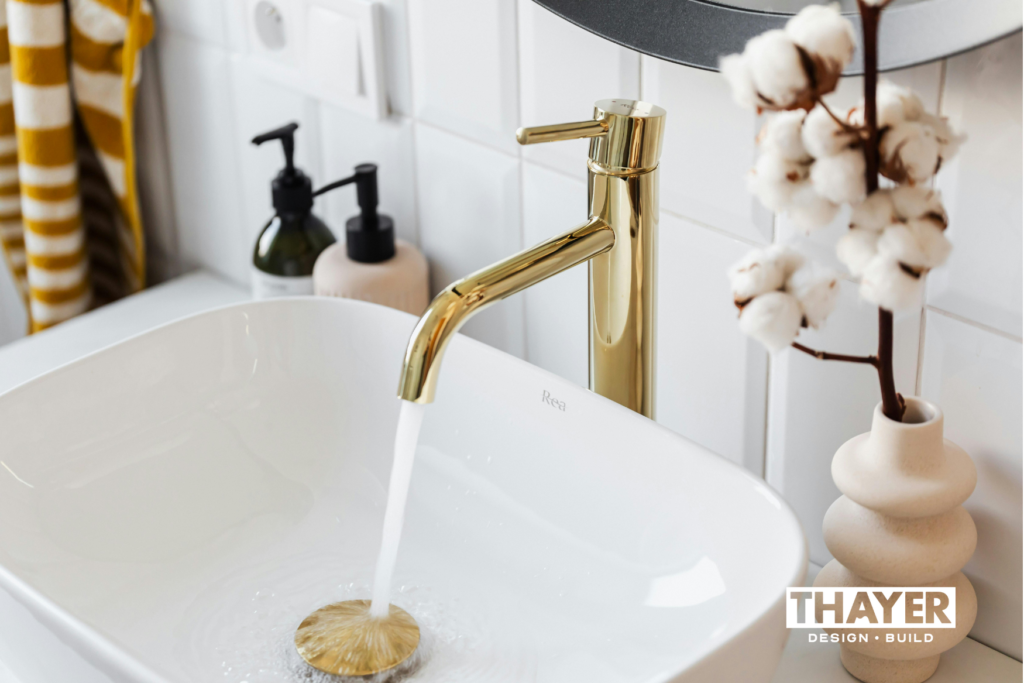
Many older Corvallis and Albany homes have closed-off kitchens, tight bathrooms, and limited storage. During design, it is easy to focus on visible upgrades (these also tend to be more fun!):
- Cabinet style
- Countertop material
- Tile selection
- Plumbing fixtures
These choices matter. They shape the look of your home.
But layout affects function. It affects:
- Workflow in the kitchen
- Connection between rooms
- Storage accessibility
- Ease of hosting
- Long-term comfort
For couples who have lived in their home for 15 or 20 years, the frustration is often not the finishes. It is the wall that still divides the kitchen from the living space. It is the bathroom that still feels tight.
For growing families, layout shows up in daily congestion. For retirees, it impacts long-term accessibility.
Moving walls and reconfiguring space are most efficient during construction. Once cabinetry and systems are installed, those changes become disruptive and costly.
We’ve heard, “That wall still bothers me.” Not because the paint choice was wrong. But because the flow never changed.
You see finishes.
You live in layout.
When making decisions, it helps to ask:
- Does this improve how we move through our home every day?
- Will we regret skipping this change once construction is complete?
Thoughtful layout rarely becomes the regret. Skipping it often does.
Underestimating How Connected Everything Is

The regret:
“We didn’t realize one small change would affect so many other things.”
During design, a decision can feel isolated.
Move a sink. Shift a wall. Add a window. Upgrade lighting.
On paper, each change seems simple. In reality, homes are systems. Especially in older Corvallis and Albany homes where plumbing, framing, and electrical were installed decades ago, everything is connected.
For example:
- Moving plumbing affects cabinetry, floors, and walls.
- Adjusting lighting impacts ceiling framing and electrical runs.
- Removing a wall can influence structural support and HVAC routing.
- Changing flooring can affect transitions, door clearances, and baseboards.
It is common for homeowners to assume adjustments can be made later without much consequence. But once construction begins, the ripple effect becomes clear. That’s why shows like “Help! I Wrecked My House” exist and why thoughtful planning matters.
In design-build projects across the mid-Willamette Valley, we often see the interconnected nature of remodeling surprise people. A lighting plan is not just about fixtures. It affects switch placement, drywall, cabinetry alignment, and sometimes even window sizing. A layout change is not just about square footage. It impacts structural loads, mechanical systems, and long-term efficiency.
That is why professional recommendations are rarely arbitrary.
They are based on experience, seeing how these pieces fit together across dozens of projects.
When homeowners understand how connected everything is, decisions become clearer. Instead of asking, “Can we just move that?” the better question becomes, “If we adjust this, what else will it influence?”
Clarity upfront reduces frustration later.
And in remodeling, clarity is one of the best ways to prevent regret.
Skipping Lighting Upgrades
The regret:
“We should have invested more in lighting.”
Lighting is often treated as a finishing detail- something selected toward the end of design once cabinetry and surfaces are finalized.
But after homeowners live in the space, lighting is one of the most noticeable elements.
In Oregon, where fall and winter bring long stretches of gray skies and early sunsets, lighting shapes daily mood more than most people expect. A kitchen that feels bright in July can feel dim and flat in December.
Layered lighting makes the difference.
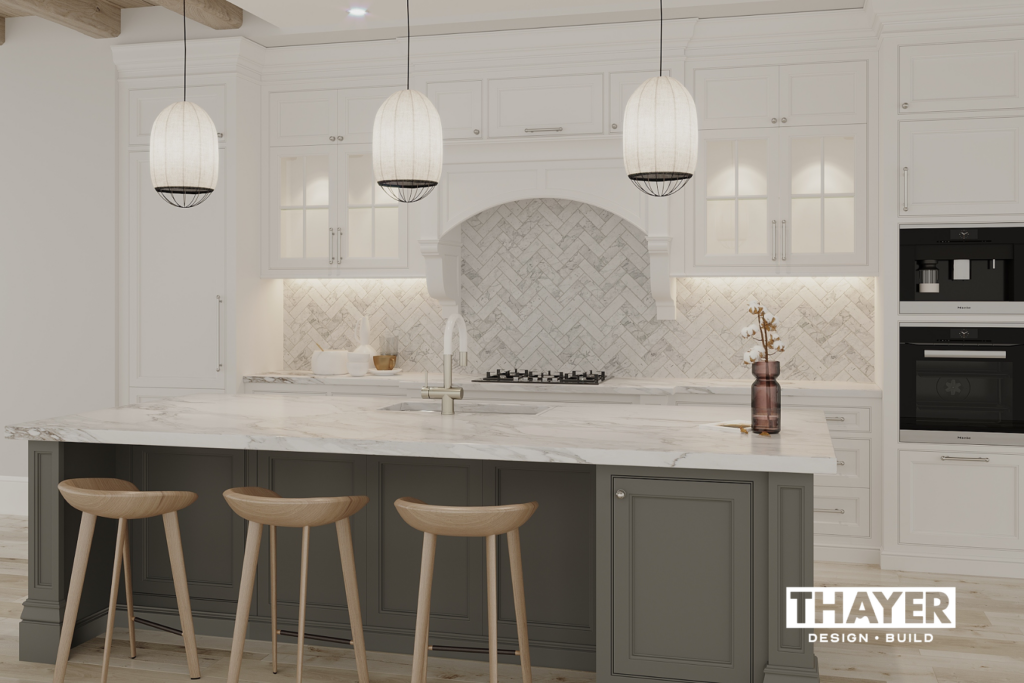
Instead of relying on a single overhead fixture, thoughtful plans often include:
- Recessed ambient lighting for overall brightness
- Under-cabinet lighting to light countertops
- Dimmers to adjust for the time of day
- Accent lighting to highlight texture or architectural features
- Exterior lighting to extend usability during darker months
Homeowners sometimes hesitate on these upgrades because they feel they are optional. Under-cabinet lighting can seem like an extra. Dimmers can feel unnecessary. Accent lighting may appear decorative rather than functional.
Months later, we’ve heard, “We should have listened about the lighting.”
Good lighting changes how a space feels in subtle but powerful ways. It improves how you cook. It makes early mornings easier. It softens evenings when you are hosting friends or enjoying a quiet night at home. And it makes the darker months of the year less harsh.
Unlike paint color, lighting affects both function and atmosphere every day.
And like layout, it is far easier to plan and install during construction than to retrofit once walls are closed and cabinetry is in place.
When considering where to invest, lighting rarely becomes the regret.
Skipping it often does.
Passing on Comfort Upgrades Like Heated Floors
The regret:
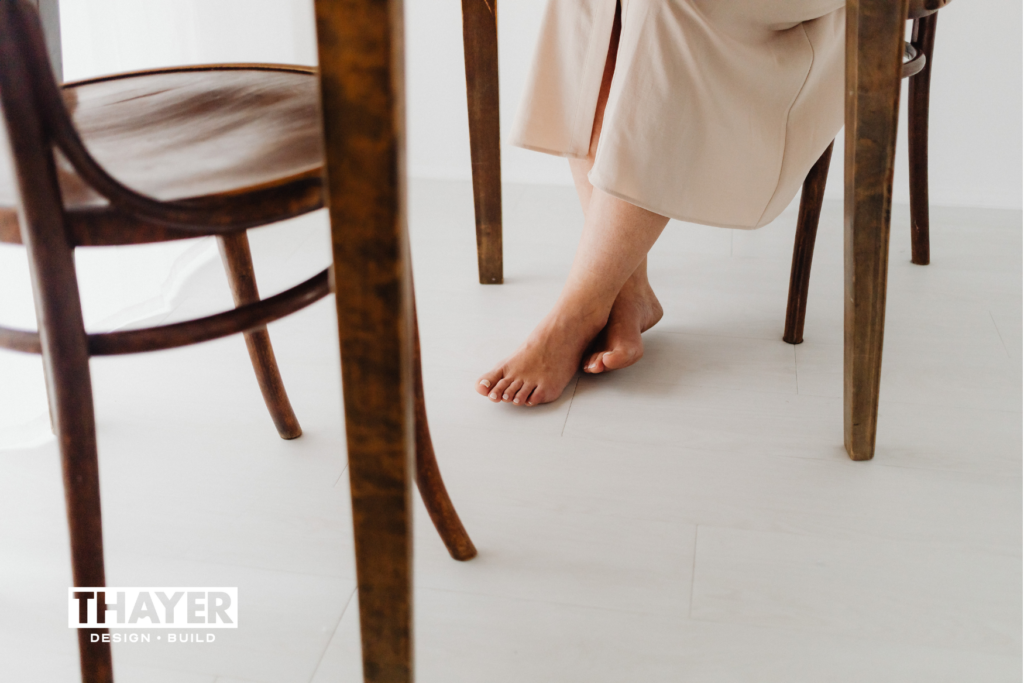
“Heated floors would have been worth it.”
During design conversations, comfort upgrades often land in the “nice to have” category.
Heated tile floors. Upgraded windows. Higher-quality hardware. Built-in storage solutions. Electrical improvements that add convenience.
In primary bathrooms across Corvallis and Albany, we often hear the same reflection during winter months. Stepping onto warm tile on a cold morning feels different than stepping onto cold stone. What felt like an extra during planning becomes part of a daily routine.
Homeowners sometimes say, “We should have just done it.” They know they underestimated how often they would notice those details.
This does not mean every upgrade is right for every home. It means that when a feature supports daily comfort for years to come, it deserves careful consideration. Comfort is not synonymous with indulgence. In many cases, it is practical. And it is rarely the investment people regret making.
Overlooking Daily Function

The regret:
“Function matters more than we expected.”
Function is rarely flashy.
It does not photograph like a statement tile or a dramatic island. But after the remodel is complete, the function of your home shapes nearly everything.
We often see this show up in small, practical details:
- Pantry depth and shelf spacing
- Mudroom flow from garage to kitchen
- Outlet placement for coffee makers and charging stations
- Shower entry width and storage niches
- Closet configuration and drawer access
At the time of design, these decisions can feel minor. It is easy to assume you will adjust. But daily life highlights them quickly.
For growing families, function can determine whether mornings feel calm or chaotic. Is there space to unload backpacks and shoes? Can more than one person move through the kitchen at once?
For those who enjoy hosting, the function supports ease. Is there enough prep space? Does traffic flow naturally between rooms?
For retirees planning to stay long-term, function becomes even more important. Are pathways clear? Is the shower easy to enter? Can storage be accessed without strain?
In older Corvallis and Albany homes, layouts were not designed for today’s lifestyles. Storage was smaller. Electrical needs were fewer. Kitchens were more isolated.
When function is carefully considered during remodeling, the home feels intuitive. When it is overlooked, friction shows up in small but persistent ways.
Homeowners rarely say, “We regret adding more storage.”
They are far more likely to say, “We did not realize how much storage would matter.”
Function may not be the most visible investment, but it is often the most lived-in one.
Waiting Instead of Doing It Right the First Time
The regret:
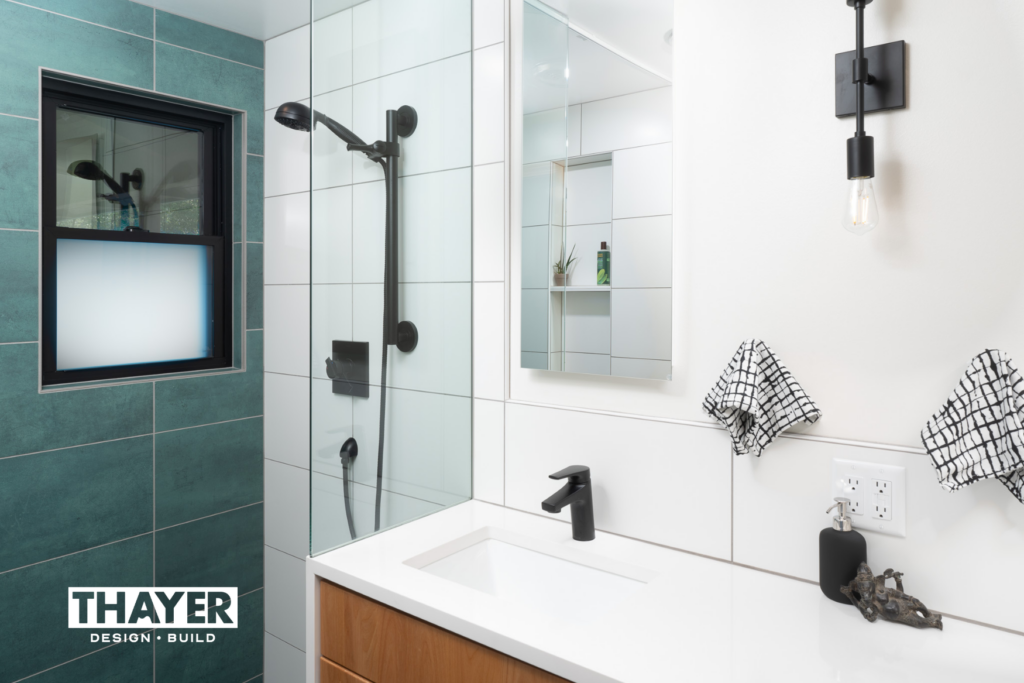
“We wish we would have included ____ in the remodel when we had the chance.”
It is completely understandable to phase decisions. Remodeling is an investment, and most homeowners want to prioritize wisely. It can feel responsible to say, “We can always add that later.”
Sometimes that works. But in many cases, construction is the most efficient time to make structural and system-level improvements.
During a remodel, walls are open. Plumbing and electrical are accessible. Flooring is already being replaced. Trades are coordinated and on-site. Adding insulation, upgrading wiring, reinforcing framing, or expanding a layout is significantly more manageable at this stage.
After the project is complete, even modest additions can require:
- Opening finished drywall
- Removing cabinetry
- Disturbing flooring
- Re-coordinating multiple trades
What felt optional during planning can become disruptive and more expensive later.
We often hear homeowners say, “We wish we would have included that when we had the chance.” Because once they experience the finished home, they see how everything works together.
Construction creates a window of opportunity. When a decision supports long-term comfort, functionality, or efficiency, that window is usually the most practical time to act.
Remodeling is not about doing everything all at once; it’s about doing the right things while the opportunity is there.
Remodel With Fewer Regrets

Most remodeling regrets are not about choosing the wrong finishes.
They are about:
- A layout that never quite changed
- Lighting that could have been layered more intentionally
- Storage that could have been deeper or better placed
- Comfort upgrades that would have improved daily life
- Functional details that felt small at the time
In homes across Corvallis and Albany, we have seen a consistent pattern. When homeowners invest in layout, lighting, function, and long-term comfort, they rarely wish they had done less.
Remodeling regret most often comes from skipping something that supports how you live every day.
This does not mean every upgrade is right for every home. Every family, every couple, and every retiree has different priorities. Thoughtful planning always starts with how you use your space.
But if there is one takeaway, it is this: Surface finishes are visible. Function, flow, and comfort are lived.
The goal of remodeling is not to spend more; it’s to prioritize wisely so your home supports you for years to come.
When decisions are made with long-term livability in mind, confidence replaces second-guessing. And your remodel becomes something you enjoy living in, not something you wish you had adjusted later.
If you are planning a remodel in Corvallis, Albany, Philomath, or anywhere in the mid-Willamette Valley, clarity upfront can make all the difference. We’d love to help guide you through it.
Thoughtful decisions today create lasting satisfaction tomorrow.