
Should You Remodel in Phases or All at Once?

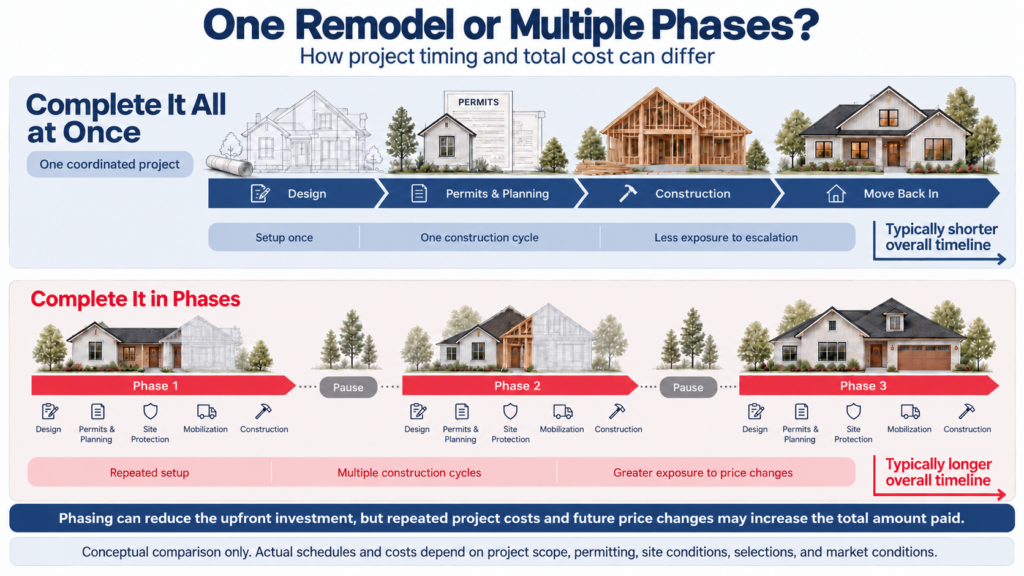
Remodeling all at once often makes sense when several spaces share walls, flooring, plumbing, wiring, or other connected work. Remodeling in phases can be a good choice when the projects are entirely separate spaces or when spreading out the investment works better for your household.
Completing everything at once can help improve efficiency and timeline. It also requires more financial preparation and a clear plan for how your household will manage during the project.
The best choice depends on how your spaces connect, what your household can reasonably manage, and how you want the home to work in the years ahead. A helpful way to think about it is: You can build in phases, but you should not plan in phases.
Why This Decision Is More Complicated Than It Seems
It is natural to think about remodeling one room at a time: the kitchen this year, the living room later, and new flooring somewhere down the road. Your home may not divide quite so neatly.
Rooms often share important parts of the home, including:
- Plumbing and electrical wiring
- Heating and cooling
- Walls that support the home
- Flooring and ceiling lines
- Lighting and built-in cabinets
For example, a kitchen, nearby living room, and main-floor flooring may look like three separate projects. But if you plan to remove a wall later, that change could affect the kitchen layout, wiring, ceiling, flooring, and heating system. Work completed during the first project might then need to be adjusted during the next one.
This does not mean you need to remodel everything at once. It simply means the connections should be understood before construction begins. That can be especially helpful in older homes throughout Corvallis, Albany, and Philomath, where several rooms may share systems installed many years ago.
Planning the complete home remodel first gives you a clearer picture of which projects belong together and which can comfortably wait. It also helps you choose an approach that supports your budget, daily life, and long-term plans for the home.
When Remodeling in Phases Can Be a Good Choice
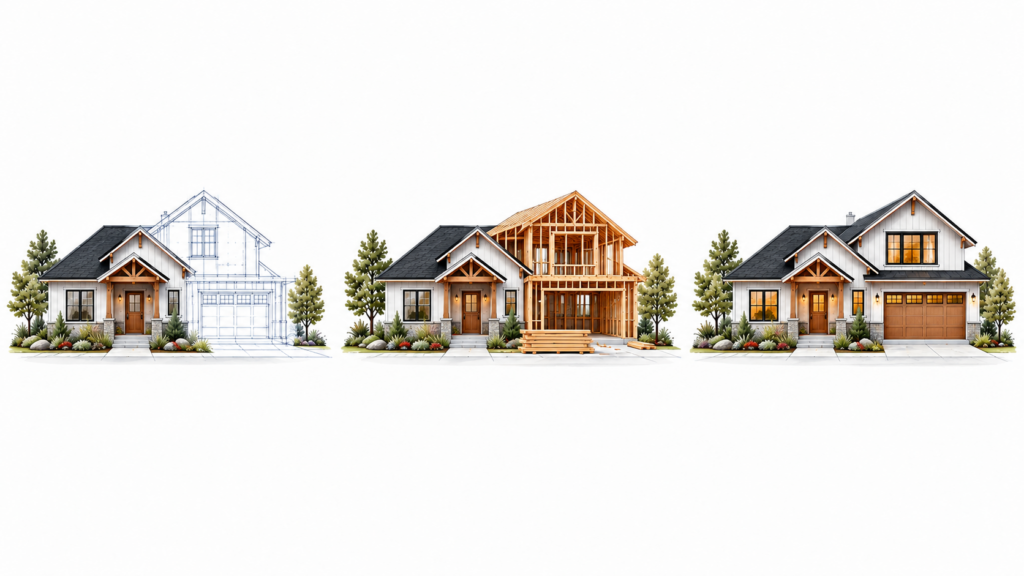
Remodeling in phases can work well when the projects involve entirely separate spaces and completing one will not interfere with another. It can also be a practical choice when your household needs to spread out the investment or keep part of the home available during construction.
Phasing may make sense when:
- Each project can be completed without affecting future work
- One area needs attention sooner than the rest of the home
- Your household needs a break between construction periods
- Spreading out the investment is necessary for your financial situation
- Each phase can end comfortably with a finished, fully usable space
- The complete home remodel is planned before the first phase begins
For example, remodeling a primary suite now and building a detached studio later may work well because the spaces have little effect on each other. The same may not be true for a kitchen and nearby living area that share walls, flooring, and wiring.
The key is making sure each phase moves you closer to the finished home without creating extra work later. A phased remodel should feel like one plan completed over time, not a series of separate decisions.
The Hidden Costs of Remodeling in Phases
Remodeling in phases can lower the amount you spend at one time, but it may increase the total cost of the complete remodel. Each new phase brings work that may only be needed once if the project is completed together.
These repeated costs may include:
- Preparing and protecting the home
- Bringing workers, tools, and equipment back to the site
- Creating new plans and applying for additional permits
- Cleaning up after each round of construction
- Repairing areas affected by later work
Time can also change the cost and look of a phased remodel. Labor and material prices may rise between projects. Flooring, tile, cabinets, or fixtures chosen during the first phase may no longer be available when the next phase begins. Even when similar products can be found, small differences may make the home feel less connected.
Phasing can also extend the total amount of time your household lives with construction. Three shorter projects may sound easier than one larger project, but they also mean preparing for construction, adjusting routines, and settling back in three different times.
This does not make phasing a poor choice. It simply means lower spending today may not lead to a lower total project cost. Understanding those tradeoffs early helps you decide whether the added time and repeated work are worthwhile for your household.
Plan the Complete Home Remodel Before Choosing the First Phase
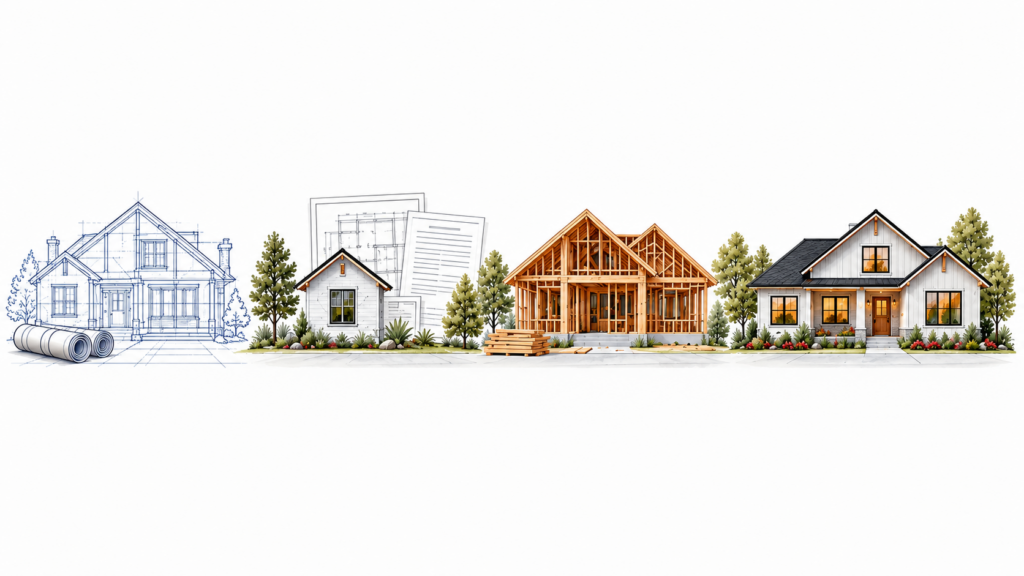
Before deciding what to remodel first, create a plan for the complete home remodel. This helps you see how each project fits into the finished home and which decisions need to be made together.
A complete plan should identify:
- The final layout of the home
- Plumbing, electrical, heating, and structural needs
- The best order for completing the work
- A budget range for the complete remodel
- Work that should happen early to prevent future changes
- Good stopping points between phases
A good stopping point should leave your home feeling finished and comfortable to use. You should not have to live with unfinished flooring, temporary walls, or spaces that cannot function properly while waiting for the next phase.
Planning the complete remodel does not mean you have to build everything right away. It gives you the information needed to decide whether phasing is truly helpful. You may discover that some projects can comfortably wait, while others should be completed together.
This early planning also makes it easier to prepare financially and understand the full timeline. Each phase can then support the next one without limiting future choices or creating unnecessary work.
Questions to Answer Before Deciding
The best remodeling approach should fit your home, your household, and your lifestyle. Before choosing between one larger project and several phases, here’s what your remodeling team has already considered and should be able to answer:
- How closely are the spaces connected?
- Could future work damage or change anything completed during the first phase?
- Do several areas share plumbing, wiring, heating, cooling, or structural work?
- How much time would pass between phases?
- Could materials or finishes become unavailable during that time?
- Can each phase end with a finished and usable space?
- What needs to be planned now, even if it will be built later?
Here’s what you will need to consider and talk to your remodeling team about:
- How many periods of construction can our household reasonably manage?
- Would we need to live somewhere else during any part of the remodel?
- Is spending less upfront more important than lowering the total project cost?
Your answers may point clearly toward one approach. They may also show that some work should be completed together while other projects can wait.
The goal is not to fit the remodel into a set number of phases. It is to choose an order that works for your daily life, protects the work you are investing in, and supports the finished home you want.
Local Considerations for Mid-Willamette Valley Homes
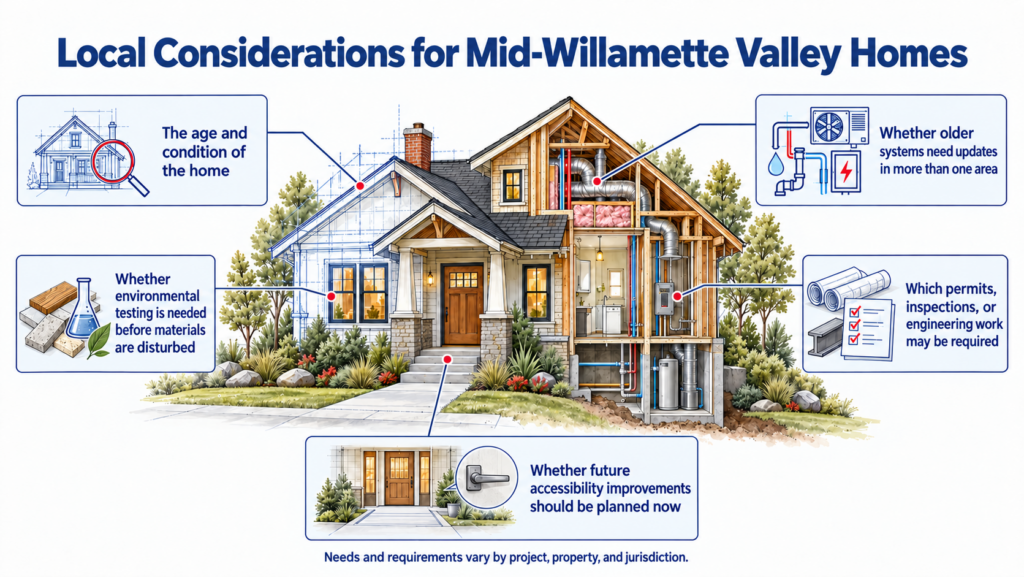
Remodeling in phases around Corvallis, Albany, and Philomath often requires extra planning because many local homes have older wiring, plumbing, insulation, or past additions. Reviewing these conditions early can help your remodeling team choose the right order for the work.
Before setting the phases, the team will consider:
- The age and condition of the home
- Whether older systems need updates in more than one area
- Whether environmental testing is needed before materials are disturbed
- Which permits, inspections, or engineering work may be required
- Whether future accessibility improvements should be planned now
Opening a wall or floor during the first phase may uncover something that affects a later project. This does not always create a major problem, but it may change which work should happen first.
Long-term plans also matter. If you expect to stay in your home for many years, it can be helpful to plan for easier movement, better lighting, safer bathrooms, or main-floor living. Those improvements do not all need to be built now, but including them in the complete home plan can prevent today’s choices from limiting your options later.
Choose the Approach That Fits the Complete Home
The decision to remodel in phases or all at once should not be based only on a room-by-room wish list. It should reflect how the work connects, how many periods of construction your household can manage, and what makes the most sense for your long-term plans.
A phased remodel works best when every stage supports a clearly planned finished home. Before deciding what to build first, make sure you understand the complete project and which decisions need to be made together.
If you are weighing one larger remodel against several phases, start with a clear plan for the complete home. Thayer Design Build can help you understand the connections, timing, and practical tradeoffs before you choose a construction approach.
Frequently Asked Questions
Is it cheaper to remodel a home in phases?
Not always. Phasing can reduce how much you spend at one time, but repeated planning, permits, site preparation, and construction work may increase the total cost. It is important to compare both the upfront investment and the cost of the complete remodel.
What parts of a remodel should be completed together?
Spaces should usually be completed together when they share walls, flooring, plumbing, wiring, heating, cooling, or structural changes. Your remodeling team should identify these connections before construction begins.
Can a whole-home remodel be planned now and built later?
Yes. Planning the complete home remodel now can help you choose the right order, prepare for future costs, and avoid decisions that limit later work. Each phase can then be completed when your household is ready.
Does remodeling in phases take longer overall?
It often does. Each phase may require its own planning and construction period, and there may be long gaps between projects. While each phase may feel more manageable, the complete remodel will usually take longer to finish.