
Why Homeowners Choose Design-Build for Complex Whole Home Remodels
One of the primary reasons homeowners choose a design-build approach is that a complex whole-home remodel typically involves coordinating dozens of decisions, trades, permits, inspections, budgets, schedules, and unexpected conditions that may be hidden from sight.
As remodeling complexity increases, coordination becomes more important. A kitchen remodel may affect plumbing, electrical, HVAC, structural framing, flooring, cabinetry, and finishes. A whole-home remodel often involves these considerations across multiple rooms at the same time. Without a clear process for planning and communication, small issues can quickly create delays, budget changes, and frustration.
This is particularly true in older Mid-Willamette Valley homes. Many homes in Corvallis, Albany, and Philomath require updates to electrical systems, plumbing, structural components, insulation, or code-related items that are not visible when a project is first discussed. These factors often have a greater impact on cost and schedule than finish selections alone. Thayer has found that many remodeling challenges can be identified and addressed through thorough planning before construction begins.
If you’ve been asking, “What are design-build firms?” or wondering whether a design-build remodeler is the right fit for your project, the answer often comes down to complexity. The more moving parts a remodel has, the more valuable it becomes to have design, budgeting, planning, and construction working together from the beginning.
This guide explains what design-build firms are, when homeowners should consider a design-build approach, why whole-home remodels are often more complex than expected, and how to evaluate remodeling companies with confidence before making a significant investment in your home.
What Are Design-Build Firms?

A design-build firm is a remodeling company that provides both design and construction services under one contract and team. Instead of hiring a designer, architect, and contractor separately, homeowners work with a single company that manages planning, budgeting, design development, and construction from start to finish.
The design-build approach differs from traditional remodeling because design and construction teams collaborate from the beginning of the project. This allows budget, scope, constructability, and scheduling considerations to be discussed while plans are being developed rather than after the design is complete.
For homeowners, this creates a single point of accountability throughout the remodeling process. Rather than coordinating communication between multiple companies, there is one team responsible for helping guide decisions, identifying potential challenges, managing budgets, and executing the work.
This integrated approach can be especially valuable for whole-home remodels, additions, major layout changes, and older homes where design decisions often affect structural, electrical, plumbing, and code-related requirements.
Design-Build vs. Traditional Remodeling
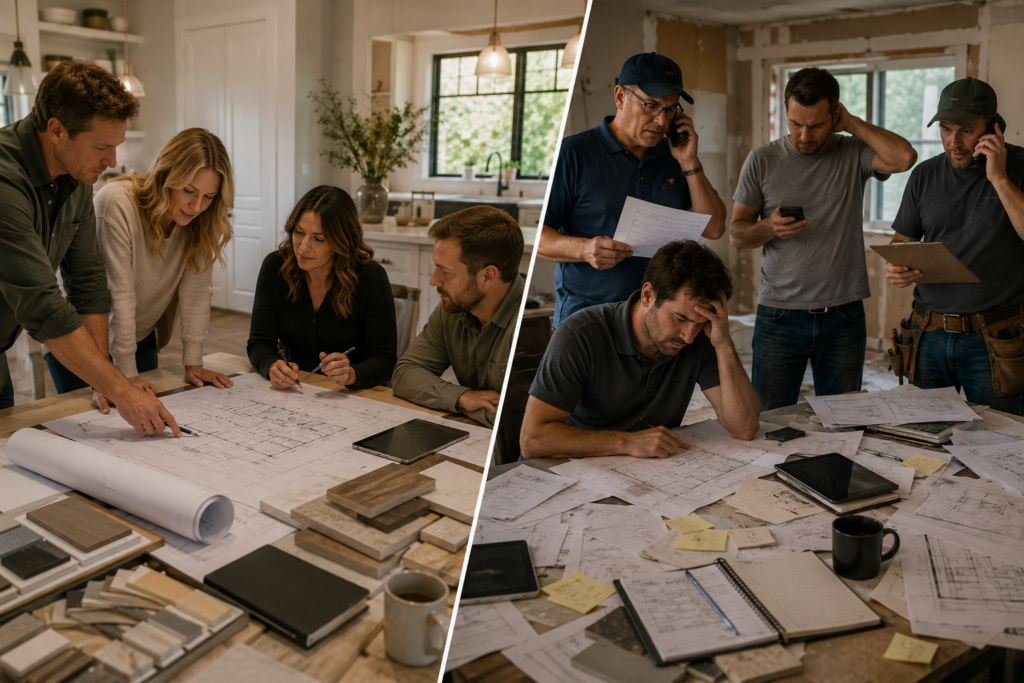
| Design-Build | Traditional Remodeling |
| One contract | Multiple contracts |
| One integrated team | Separate design and construction teams |
| Budget developed during design | Budget is often developed after design is complete |
| Single point of contact | Multiple points of contact |
| Design and construction decisions happen together | Design and construction may happen separately |
| Shared accountability from start to finish | Responsibility may be divided between parties |
Neither approach is inherently right or wrong. For smaller projects with limited complexity, either model can be successful. However, as a project becomes larger and involves more coordination, many homeowners find that bringing design and construction together under one team creates greater clarity throughout the process.
If you’d like a deeper comparison of the different types of remodeling contractors available, we recommend reading our blog on choosing the right contractor for your remodel.
When Should You Hire a Design-Build Firm?
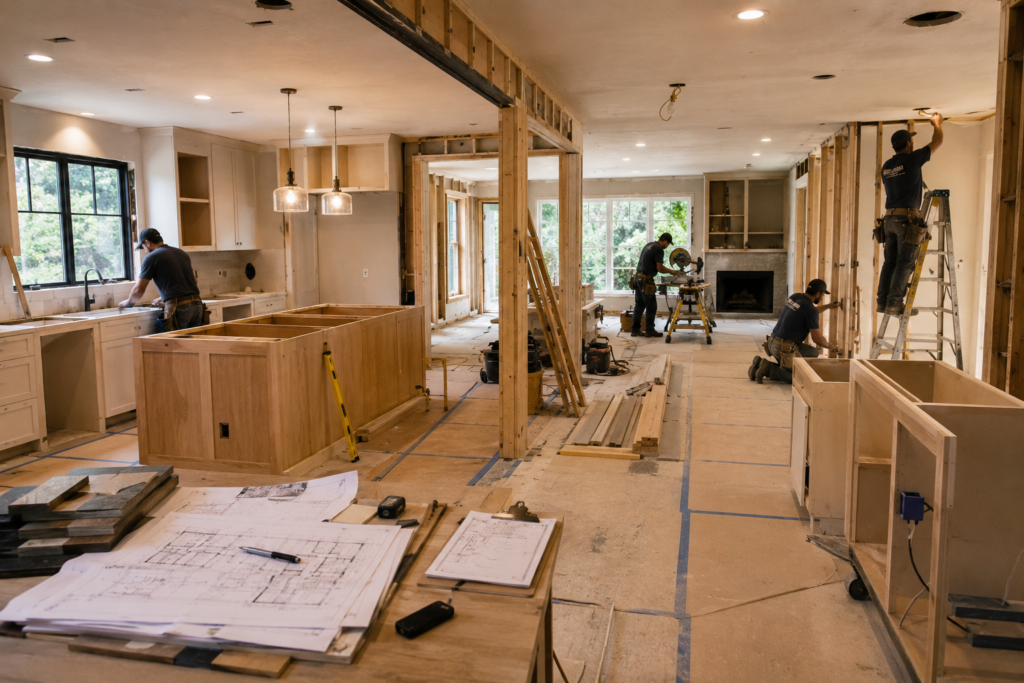
A design-build firm is often the best fit when a remodeling project involves multiple rooms, layout changes, structural modifications, additions, aging-in-place upgrades, or significant coordination between trades. The more complex a project becomes, the more valuable it is to have design, budgeting, planning, and construction managed by a single team.
Projects That Benefit Most from Design-Build
While design-build can be used for projects of all sizes, it tends to provide the greatest value when a project has many interconnected parts.
Whole-Home Remodels
Whole-home remodels often require decisions in one area of the home to be coordinated with work happening elsewhere. Changes to room layouts, mechanical systems, flooring, lighting, and finishes can affect multiple spaces at the same time. For example, remodeling a kitchen, primary bathroom, and living areas simultaneously requires careful scheduling and communication. Design-build helps keep the project aligned by allowing design and construction teams to collaborate throughout the process.
Home Additions
Home additions involve much more than adding square footage. Structural engineering, permitting, foundation work, utility connections, roofing integration, and exterior finishes all need to be coordinated with the existing home.
Major Layout Changes
Removing walls, relocating kitchens, expanding bathrooms, or creating open-concept living spaces often requires structural analysis and coordination between multiple trades before construction begins.
Structural Modifications
Any project involving load-bearing walls, beams, foundation changes, or significant framing modifications benefits from early collaboration between design, engineering, and construction professionals.
Aging-in-Place Renovations
Many homeowners want to improve long-term accessibility while maintaining the character and appearance of their home. Achieving both goals often requires thoughtful planning and coordination across multiple spaces.
Simultaneous Kitchen and Bathroom Remodeling
Kitchen and bathroom remodels are typically the two most complex rooms in a home due to the concentration of plumbing, electrical, cabinetry, fixtures, and finishes. When both are remodeled together, coordination becomes even more important.
Complexity Increases the Value of Coordination
One of the biggest misconceptions homeowners have is that remodeling complexity is measured by square footage alone.
In reality, complexity is often driven by the number of decisions, trades, systems, and moving parts involved. A relatively small remodel that includes structural changes, plumbing relocation, and extensive permitting may require more coordination than a larger project with a straightforward scope.
As a general rule, the more moving parts a project has, the more important coordination becomes. That is where the design-build approach often provides the greatest benefit.
Why Whole-Home Remodels Are More Complex Than Most Homeowners Expect
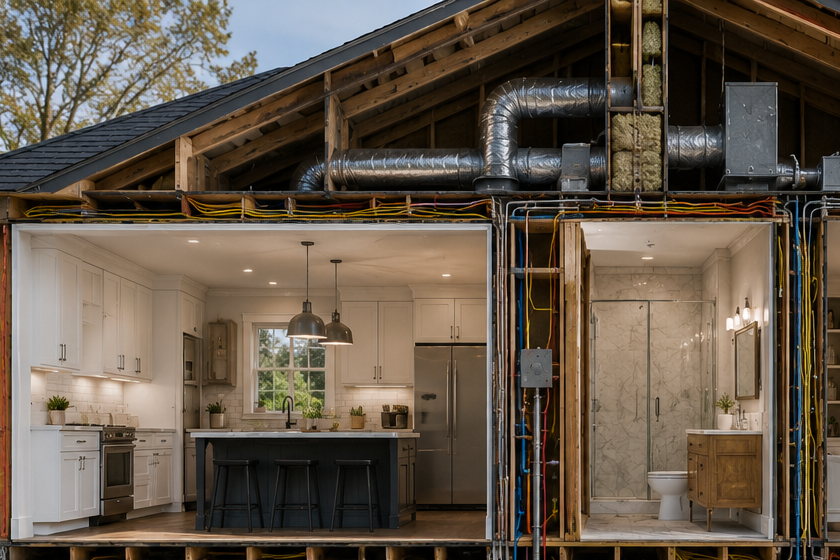
Whole-home remodels are often more complex than homeowners expect because visible design choices and behind-the-scenes construction requirements have to be planned together.
Selections like custom cabinetry, countertops, tile, flooring, appliances, lighting, and plumbing fixtures can have a significant impact on the final cost of a remodel. In many projects, custom cabinetry can be one of the larger investment areas because of material costs and it affects storage, layout, function, finish quality, and installation detail.
At the same time, the less visible parts of a remodel can affect how the project needs to be designed, scheduled, permitted, and built. These items may not always be the most expensive line items, but they can influence the scope and sequence of the work.
What You Can See vs. What You Can’t

At Thayer, we often describe remodeling as an iceberg.
Above the waterline are the decisions homeowners usually expect to make:
- Cabinetry
- Countertops
- Flooring
- Tile
- Plumbing fixtures
- Lighting
- Paint colors
- Appliances
- Hardware and finishes
Below the waterline are the technical and logistical factors that also need to be considered:
- Structural modifications
- Electrical upgrades
- Plumbing upgrades
- HVAC changes
- Engineering requirements
- Permits and inspections
- Building code compliance
- Lead testing
- Asbestos testing
- Material lead times
- Project scheduling and logistics
- Hidden conditions behind walls, ceilings, and floors
The point of this comparison is not that everything below the waterline is more expensive than everything above it. The point is that both visible and hidden factors affect the final project plan.
A homeowner may choose beautiful custom cabinetry, premium countertops, and high-end tile that meaningfully shape the budget. At the same time, an older home may require electrical updates, plumbing adjustments, framing changes, or code-related work that affects how the remodel can be completed.
Why Planning Matters More Than Most Homeowners Realize
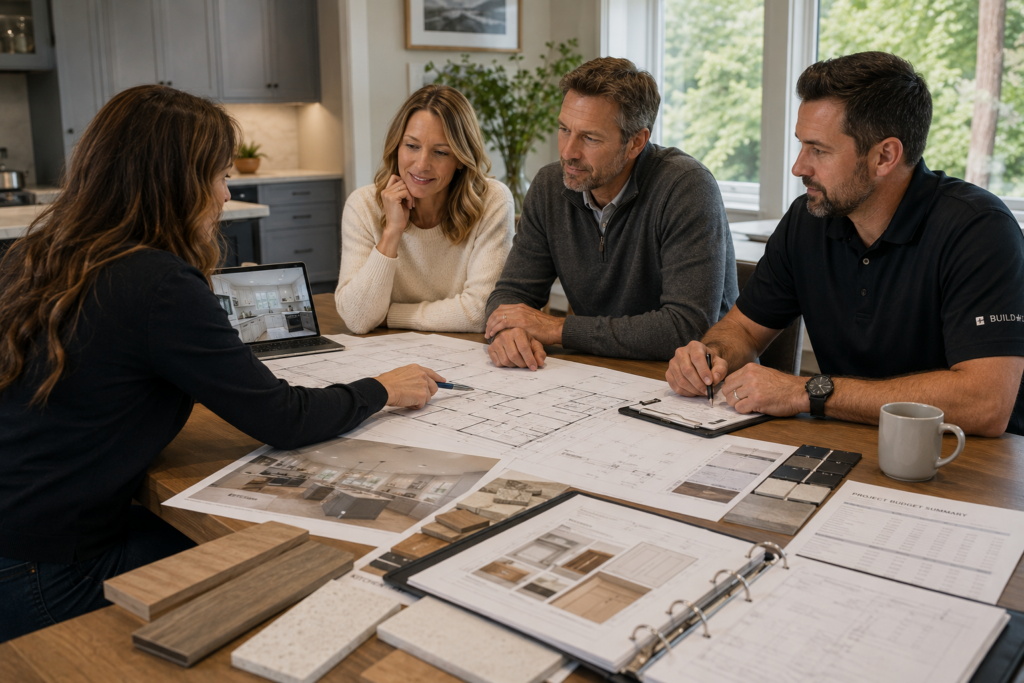
Planning matters because remodeling decisions are connected.
Moving a kitchen sink may require plumbing modifications. Removing a wall may require engineering and structural reinforcement. Expanding a bathroom may affect electrical, ventilation, framing, or waterproofing requirements. Choosing custom cabinetry may affect layout, appliance placement, storage, lead times, and installation sequencing.
In a whole-home remodel, these decisions often overlap across multiple rooms. That is why planning is not only about choosing finishes. It is about understanding how design decisions, budget priorities, construction requirements, and scheduling constraints work together.
Thorough planning helps create:
Clearer Cost Expectations
A detailed planning process helps homeowners understand which choices are driving the budget, whether those costs come from selections, labor, structural work, trade coordination, or project complexity.
More Predictable Schedules
Permits, engineering, product lead times, trade sequencing, and homeowner decisions can be accounted for before construction begins.
More Accurate Scope
A clear scope helps define what is included, what assumptions have been made, and which parts of the home may need additional investigation.
Fewer Mid-Project Surprises
The more questions that are answered during planning, the fewer urgent decisions need to be made once construction is underway.
A whole-home remodel becomes complex because design choices, existing conditions, building systems, labor, materials, and scheduling all interact. The value of a thorough design-build process is that these factors are considered together before construction begins.
Is Design-Build More Expensive Than Traditional Remodeling?
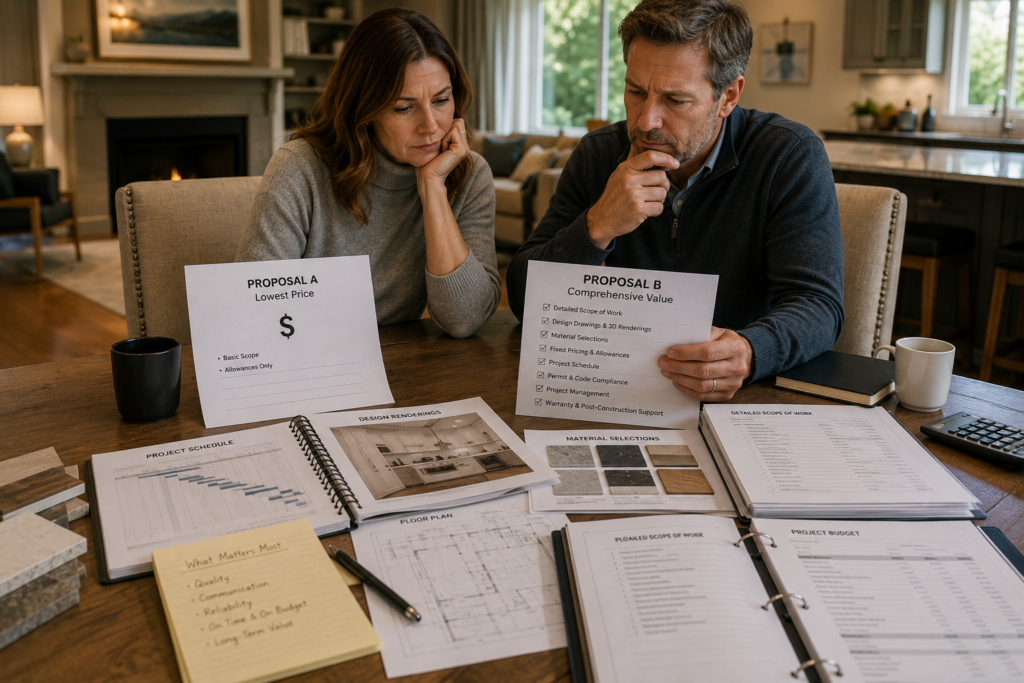
Not necessarily. Design-build remodeling is not automatically more expensive than traditional remodeling. The total cost depends on the project’s scope, complexity, material selections, existing conditions, and the services included. While design-build firms often invest more time in planning and pre-construction, many homeowners find that this upfront effort helps reduce uncertainty, improve communication, and identify potential issues before construction begins.
When comparing design-build and traditional remodeling, it is important to compare the complete project experience rather than focusing solely on the initial proposal amount. Two projects with similar scopes may have very different costs depending on the level of planning, project management, design services, and risk mitigation included.
In many cases, the better question is not, “Which approach costs less?” but rather, “Which approach provides the most confidence that the project will be completed as expected?”
Why Do Remodeling Estimates Vary So Much?
Why do remodeling estimates vary so much?
Remodeling estimates can vary significantly because contractors often make different assumptions about project scope, materials, labor, planning requirements, project management, and potential risks. Two proposals may look similar on the surface while including very different levels of service, detail, and preparation.
Some of the most common reasons remodeling estimates vary include:
Scope Assumptions
Not every contractor defines the project the same way. One proposal may include work that another proposal excludes or assumes will be handled later.
Design Services
Some companies provide extensive design development, space planning, material selection assistance, and construction documentation before construction begins. Others may provide limited design services or rely on plans created elsewhere.
Project Management
Complex remodels require coordination between trades, suppliers, inspectors, engineers, and homeowners. The amount of project management included can vary significantly between companies.
Material Allowances
A proposal may include allowances for cabinetry, fixtures, flooring, appliances, or tile. If those allowances do not align with the selections a homeowner ultimately makes, the final investment can change substantially.
Investigation and Planning
Some remodelers invest significant time upfront identifying structural concerns, code requirements, permit considerations, and potential project challenges. Others may address those issues later as they are discovered.
Communication and Client Experience
Regular updates, scheduling systems, design meetings, selection guidance, and homeowner communication all require time and resources that may or may not be reflected in an estimate.
Risk Management
Older homes often contain unknowns. Companies differ in how they account for potential risks, hidden conditions, and project complexity when developing budgets.
Why the Lowest Bid Isn’t Always the Best Value
Most homeowners want to make a smart financial decision, which is understandable. However, the lowest proposal is not always the proposal that provides the best overall value.
A lower estimate may be the result of:
- Missing scope items
- Lower material allowances
- Limited planning and investigation
- Reduced project management
- Unrealistic schedule assumptions
- Future change orders that were not included initially
This does not mean a higher proposal is automatically better. It simply means that comparing remodeling estimates requires understanding what is actually included, what assumptions have been made, and how the company plans to manage the project from start to finish.
For many homeowners, the goal is not finding the lowest price. The goal is finding the approach that provides the greatest confidence in the final outcome.
For a deeper look at how pricing structures affect remodeling projects, read our guide on fixed-price remodeling versus time-and-materials agreements.
How to Choose a Design-Build Remodeler
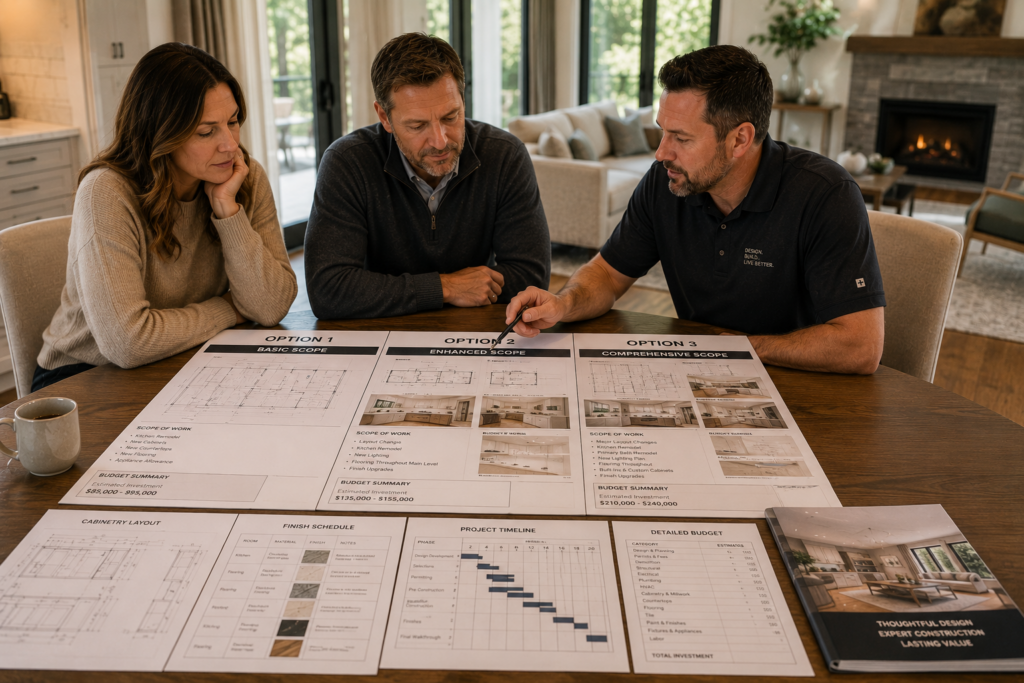
Choosing a design-build remodeler is about more than comparing portfolios and pricing. The right fit often comes down to communication, planning, experience, and how the company manages complexity before construction begins.
If you’re evaluating design-build firms for a whole-home remodel, consider the following questions.
Do They Educate Instead of Pressure?
A good remodeler should help you understand your options, potential challenges, and tradeoffs without pushing you toward a decision.
Complex remodeling projects involve significant investments. You should feel informed and confident throughout the process, not rushed.
Do They Communicate Clearly?
Communication is one of the most important factors in a successful remodeling experience.
Ask how the company handles updates, homeowner meetings, scheduling, design decisions, and project questions. A clear communication process often becomes even more important during larger projects involving multiple rooms and trades.
Do They Set Realistic Expectations?
Be cautious of promises that sound too good to be true.
Experienced remodelers understand that older homes can contain unknown conditions and that permitting, engineering, material lead times, and construction schedules all require careful planning. A trustworthy company will discuss both opportunities and potential challenges openly.
Do They Have Experience With Similar Projects?
A company that primarily handles kitchens may not be the best fit for a whole-home remodel involving structural modifications and multiple phases of construction.
Ask to see examples of projects that resemble your own in size, complexity, and scope. Experience with older Mid-Willamette Valley homes can be especially valuable because these homes often present unique structural, plumbing, electrical, and code-related considerations.
You can explore examples of completed remodeling projects in our portfolio.
Do They Discuss Risks Honestly?
Every remodeling project carries some level of uncertainty, particularly when working within an existing home.
Rather than avoiding these conversations, experienced design-build remodelers address them directly. They explain what is known, what may require further investigation, and how potential risks will be managed throughout the project.
Do They Have a Defined Process?
One of the advantages of design-build remodeling is having a structured process that guides the project from initial planning through final construction.
Ask prospective remodelers how they approach design, budgeting, permitting, selections, construction, and project management. The more clearly a company can explain its process, the easier it will be to understand what to expect.
If you’d like to learn more about how a design-build process works, read our guide to the remodeling process.
Do They Focus on Long-Term Relationships?
The completion of construction should not be the end of the relationship.
Many homeowners find value in working with a remodeler who can serve as a trusted resource long after the project is complete. Whether that means future remodeling phases, warranty support, maintenance guidance, or simply having someone familiar with the home, long-term relationships often provide value beyond the initial project.
The Right Fit Matters More Than the Lowest Price
The best design-build remodeler is not necessarily the largest company, the lowest bidder, or the firm with the most awards.
The best fit is the company that understands your goals, communicates clearly, demonstrates experience with projects like yours, and has a process that gives you confidence in the outcome.
For homeowners planning a complex whole-home remodel, finding the right partner is often just as important as the design itself.
Frequently Asked Questions About Design-Build Home Remodeling
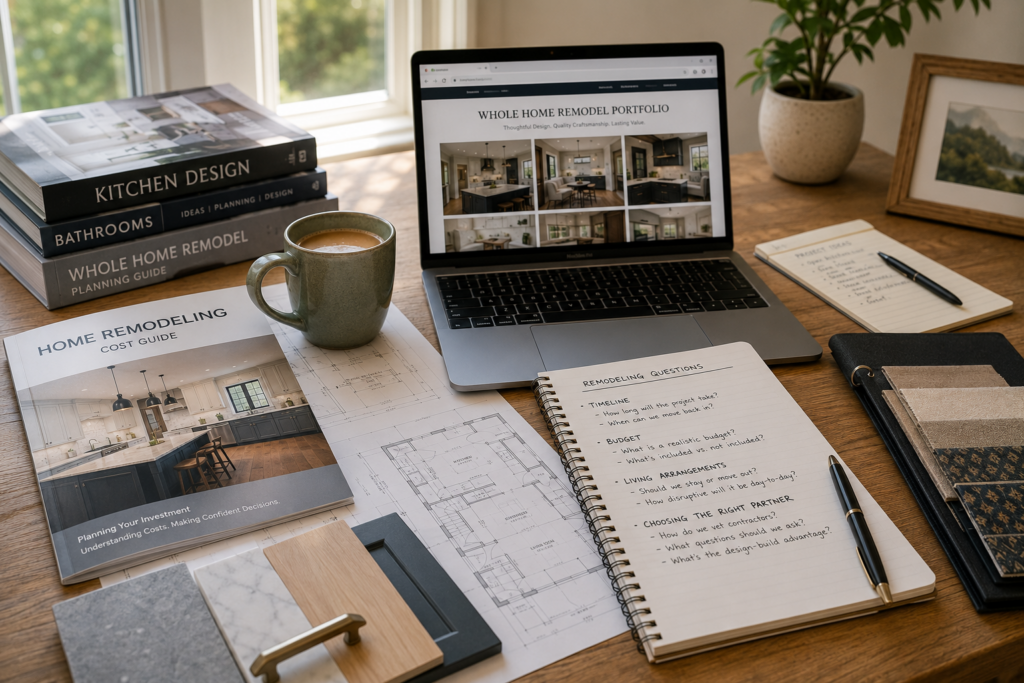
The timeline for a whole-home remodel depends on the size and complexity of the project. At Thayer Design Build, we usually anticipate approximately three months for design, four to six weeks for preconstruction, and about four months for construction.
The design phase includes milestones like developing plans, refining scope, making selections, and establishing a project budget.
Preconstruction involves obtaining permits when needed, ordering materials, and coordinating trade partners.
Construction timelines can vary based on the scope of work and trade availability (among other things), but many whole-home remodels require approximately four months of active construction. This includes projects involving additions, major structural modifications, extensive layout changes, or unusually complex conditions. If your home remodel is not this complex, the amount of time is expected to be less than 8 months.
Sometimes, but it depends on the scope of work. Homeowners can often remain in the home during smaller phased remodels. However, projects involving multiple rooms, major plumbing or electrical work, kitchen remodels, or extensive structural modifications may make living in the home difficult or impractical during portions of construction. Your remodeler should discuss living arrangements during the planning phase. We recommend reviewing these considerations for whether or not to live at home during a remodel.
The best furniture storage solution depends on the size of your remodel, the amount of furniture involved, and whether you plan to remain in the home during construction.
For smaller projects, homeowners may be able to relocate furniture to unaffected areas of the home. For larger whole-home remodels, many choose to use portable storage containers, self-storage units, or temporary off-site storage to protect furniture, artwork, electronics, and other belongings from dust, damage, and disruption.
The key is to create a storage plan before construction begins. This helps keep your belongings protected, provides contractors with adequate workspace, and can make the remodeling process less stressful for everyone involved.
For a detailed comparison of storage options, read our guide on how to store furniture during your home remodel.
A traditional contractor is typically responsible for construction, while a design-build firm manages both design and construction under one team. With design-build remodeling, homeowners work with a single company that coordinates planning, budgeting, design development, permitting, and construction. This creates a single point of accountability throughout the project.
Design-Build Home Remodeling is Best for Homeowners Who Want Optimal Alignment
Design-build is not the right solution for every remodeling project. Smaller projects with limited complexity can be successful under a variety of project delivery methods.
However, as a remodel becomes larger and more complex, many homeowners find value in having design, budgeting, planning, and construction managed by a single team. Whole-home remodels, additions, major layout changes, aging-in-place renovations, and older homes often involve significant coordination between homeowners, designers, trade partners, engineers, suppliers, and local jurisdictions.
The primary benefit of design-build remodeling is not necessarily lower cost. It is greater alignment throughout the project. When planning and construction teams work together from the beginning, homeowners often gain clearer expectations, more informed decision-making, and a smoother remodeling experience.
If you’re considering a whole-home remodel in Corvallis, Albany, Philomath, or the surrounding Mid-Willamette Valley, the most important step is finding a remodeling partner with the experience, communication, and process that matches your goals.
Ready to Explore Your Options?
If you’re considering a whole-home remodel and would like to discuss your goals, schedule a call with our team. We’ll help you explore your home’s potential, answer your questions, and help you make an informed decision about whether a design-build approach is the right fit for your project.
You can also browse our portfolio to see how we’ve helped Mid-Willamette Valley homeowners transform older homes through thoughtful design-build remodeling.